
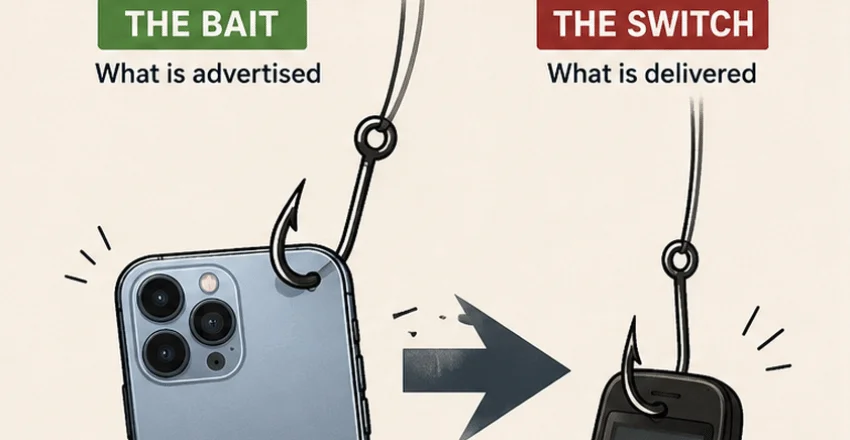
Bait and switch is a deceptive sales tactic that lures you with one appealing offer and then pushes you toward something different. The original deal may be unavailable, disparaged, or offered under terms that were never clearly presented. What separates deception from normal selling is whether the original offer was genuine.
Short answer: A bait-and-switch scheme uses an attractive offer to get your attention and then steers you toward something different because the original offer was never genuine. The key issue is intent. A normal upsell presents an alternative while the advertised deal remains available; deceptive bait advertising uses the original offer mainly to generate leads.
| Question about Bait and Switch | What to know |
| What is the “bait”? | An attractive price, product, service, rate, or other promise |
| What is the “switch”? | Pressure to accept a different or less favorable offer |
| What makes it deceptive? | The seller never genuinely intended to honor the original offer |
| Where can it happen? | Retail, car sales, services, financing, subscriptions, hiring, and online sales |
| Is it illegal in the U.S.? | Deceptive bait advertising can violate federal and state consumer-protection rules |
| Best first response | Save the advertisement, get the terms in writing, and avoid making a pressured decision |
Key takeaways
- A low price alone doesn’t make an offer deceptive.
- The strongest warning sign is an attractive offer that disappears as soon as you respond.
- A genuine stock shortage differs from a planned attempt to steer buyers elsewhere.
- Written evidence makes it easier to challenge misleading claims.
- Businesses also risk losing customer trust when their advertising promises don’t match the actual offer.
What the Term Means
Federal guidance describes bait advertising as an appealing but insincere offer for a product or service that the advertiser does not genuinely intend to sell. Its purpose is to attract interested buyers and steer them toward another offer, often at a higher price or on terms that favor the seller.
The “bait” can be more than a cheap product. It might be an unusually low service quote, a promotional interest rate, a discounted subscription, or an attractive job description. The “switch” happens after you respond. You may be told that the advertised option is unavailable, unsuitable, defective, or no longer offered. A salesperson then presents an alternative.
How Bait and Switch Works
The pattern is easier to recognize when you break it into four stages:
- An unusually attractive offer gets attention. The price or terms stand out from competing offers.
- You contact the seller or visit the business. The advertisement has done its job by generating a lead.
- The original offer becomes difficult to buy. Staff may say it is unavailable or try to discourage you from choosing it.
- A substitute appears. The replacement may cost more, offer less value, or come with different conditions.
Signs of deceptive bait advertising can include refusing to show the advertised product, disparaging it, failing to stock reasonable quantities, or refusing reasonable orders.
Common Bait-and-Switch Examples

A car dealer advertises a particular vehicle at a standout price. When a buyer arrives, the dealer says that exact car is gone and immediately promotes a more expensive model. A service company advertises a low-cost entry package. After the customer calls, the representative claims that the package cannot meet ordinary needs and pushes a more expensive alternative.
An online listing may present one product through its photos and description but deliver something materially different. The same tactic can appear in financing when attractive headline terms draw in applicants who are later steered toward less favorable terms. The phrase also appears outside retail.
A worker might describe a job as a bait-and-switch situation when the role, pay, schedule, or responsibilities change significantly after acceptance. That broader everyday use doesn’t automatically mean the situation meets the legal definition of deceptive advertising. Elsewhere on the site: What Is Slander.
Deception, Upselling, or a Genuine Stockout?
This distinction matters because not every alternative offer is dishonest.
| Situation | Original offer genuine? | What happens next? | Typical concern |
| Deceptive bait advertising | No, or not in a meaningful way | The buyer is steered elsewhere | Consumer deception |
| Normal upselling | Yes | The seller offers an optional upgrade | Ordinary sales practice |
| Genuine stock shortage | Yes | The item unexpectedly sells out | Usually a supply issue |
| Disclosed limited-quantity sale | Yes | The advertisement clearly warns that supply is limited | Generally more transparent |
Supply limitations matter. A business may legitimately run out of an advertised product, especially when the advertisement clearly states that quantities are limited. The concern grows when the attractive offer was never genuinely available in the first place. A genuine loss-leader promotion is also different. In that situation, the low-priced offer is real, even if the seller hopes customers will purchase other products as well.
Is Bait and Switch Illegal?
Deceptive bait-and-switch sales practices can violate consumer-protection laws. A legitimate advertisement should represent a genuine effort to sell the product, service, or deal being promoted. That does not mean every disappointing sale or changed offer proves a legal violation.
The facts matter, including what the advertisement promised, whether the seller intended to honor it, the available inventory, any disclosed restrictions, and what happened after the customer responded. Depending on the circumstances, other consumer-protection, fraud, contract, or civil claims may also become relevant.
For broader explanations of legal topics, Readlish also maintains a law section.
7 Warning Signs to Watch For
Pay closer attention when several of these signs appear together:
- The advertised price is far below comparable offers without a clear explanation.
- Staff refuses to show or sell the exact advertised option.
- The seller immediately criticizes the product used in the advertisement.
- Important restrictions appear only after you make contact.
- You are pressured to quickly accept a more expensive replacement.
- The business refuses to put the advertised terms in writing.
- The same attractive offer remains advertised even though staff repeatedly claim it is unavailable.
One sign alone doesn’t prove deception. A repeated pattern is more meaningful.
What to Do If an Offer Changes
First, slow down the transaction. Sales pressure works best when you feel committed because you have already traveled, called, applied, or spent time negotiating. Save a screenshot or copy of the original advertisement. Keep emails, messages, written quotes, receipts, and any terms you received. Ask the seller to explain the difference between the advertised offer and the one now being presented.
If the explanation doesn’t make sense, you can leave without accepting the substitute. If you believe the advertisement was deceptive, you can also report the business to the appropriate consumer-protection authority in your area. For a significant financial loss or contract dispute, consider speaking with a qualified local attorney or consumer-protection office about your specific circumstances.
Why Businesses Should Avoid Misleading Switches
A questionable promotion can generate leads today and destroy trust tomorrow. Customers judge a company by the gap between what its marketing promises and what employees actually deliver. That makes transparent advertising part of the customer experience rather than a separate issue. Readlish’s digital marketing articles cover the broader marketing side of that relationship, while its discussion of customer experience as business value examines why customer expectations matter commercially.
Clear terms, honest stock disclosures, and optional upgrades allow a company to sell more without misleading buyers.
The Simplest Rule to Remember
Ask one question: Could I genuinely have bought what attracted me in the first place?
If the answer is yes and an upgrade was optional, you may be looking at normal selling. If the attractive offer existed mainly to get you through the door before being withdrawn, the pattern warrants closer scrutiny. For more practical consumer and company topics, browse Readlish’s business coverage.
Frequently Asked Questions
Deceptive bait advertising can violate federal and state consumer-protection laws. Whether a specific case is unlawful depends on the facts, including the advertisement, the seller’s intent, the availability of the original offer, and how the customer was treated after responding.
No. In a normal upsell, the original offer remains genuine and available under its stated terms. The seller simply gives you the option to pay more for something else.
No. Products can sell out for legitimate reasons. Businesses may also clearly disclose that an offer is subject to limited availability. The concern grows when the seller never intended to make a genuine effort to provide the advertised item.
Yes, in everyday language. People use it when a job’s pay, duties, schedule, location, or other major conditions change after the candidate accepts the role. That everyday label doesn’t automatically establish a consumer-advertising violation.
Keep the original advertisement, screenshots, emails, text messages, written quotes, invoices, and receipts. Record the dates and the specific differences between what was promised and what was eventually offered.