
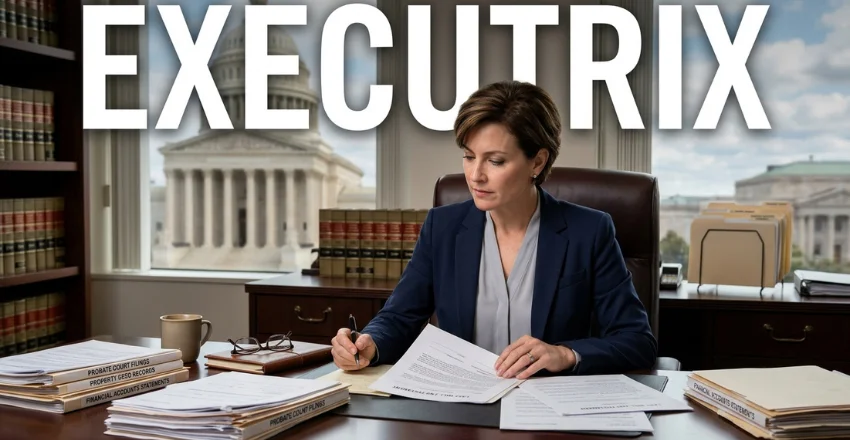
If a will names you as an executrix, it means you will serve as the estate’s executor. The title is traditional, not a separate job with different powers. U.S. probate rules still depend on the state administering the estate.
| Key point | What it means |
|---|---|
| Traditional meaning | A woman named in a will to carry out its instructions |
| Modern term | Executor or personal representative |
| Main responsibility | Administer the deceased person’s estate |
| Common duties | Secure assets, handle debts and taxes, and distribute property |
| Authority | Usually depends on the will, state law, and probate documents |
| Compensation | May be available under the will or state law |
| Governing law | Probate rules vary by state |
Direct answer: This older legal title means a woman named in a will to administer a deceased person’s estate. Modern U.S. practice usually uses executor or personal representative instead. The duties generally include gathering assets, paying valid debts and taxes, and distributing property under the will.
Key Takeaways
- The feminine title describes the same basic role as an executor.
- Modern documents often use executor or personal representative for every gender.
- The person handling the estate has legal and financial responsibilities.
- Court authorization may be required before certain actions can begin.
- Probate procedures, compensation, deadlines, and powers differ by state.
- Being named in a will does not always mean someone must accept the position.
What the Older Legal Term Means Today
Historically, English legal language used gendered titles for several legal roles. A woman serving as executor could receive a separate feminine title. Modern U.S. documents usually use executor or personal representative for any gender.
Cornell’s Legal Information Institute describes the feminine title as antiquated and says executor is now generally used for everyone. The IRS still recognizes both traditional forms in its estate guidance. For more plain-English legal topics, browse the Readlish Law section.
The wording change does not cancel an appointment made in an older will. Older estate documents can remain relevant even when their terminology sounds dated. The legal effect depends on the document, applicable law, and probate process.
Executrix vs. Executor: What Changes and What Does Not
| Term | Traditional meaning | Modern U.S. usage | Basic role |
|---|---|---|---|
| Older feminine title | Woman named in a will | Less common today | Administers the estate |
| Executor | Traditionally male | Common gender-neutral term | Carries out the will |
| Personal representative | Gender-neutral umbrella term | Common in statutes and courts | Manages a deceased person’s estate |
| Administrator | Often court-appointed | Used when circumstances require | Administers an estate under state law |
The practical role does not become narrower because an older feminine label appears in a will. The person still administers the probate estate under applicable law and the document’s instructions. Banks and courts may use newer terminology on their current forms.
An administrator can differ from an executor because the source of the appointment may differ. The IRS explains that an executor is generally named in a will. An administrator is usually appointed when no qualifying executor is serving.
How Appointment and Legal Authority Work

A will can nominate an executor, but nomination alone may not complete every required step. Probate procedures differ by state and by estate type. A court may issue letters testamentary or similar documents confirming authority.
Those court papers can matter when contacting banks, tax agencies, or other institutions. The IRS estate administrator guidance explains that court-issued letters can establish authority. Before transferring property, confirm what the appropriate state court requires.
Small estates may qualify for simplified procedures under some state laws. Certain property can also pass outside the ordinary probate process. The correct procedure depends on ownership, beneficiary designations, estate value, and local law.
7 Main Duties of a Personal Representative
Executor duties begin with protecting the estate and building an accurate picture of what exists. The exact sequence varies by state and estate complexity. Most administrations still involve the same broad responsibilities.
- Locate the will and determine the required probate procedure. Confirm which court handles the estate and what filings are required.
- Protect estate property. Secure homes, vehicles, financial accounts, valuables, records, and other assets that require protection.
- Identify and document assets. Create an inventory and obtain valuations when state rules or practical needs require them.
- Address valid debts and creditor claims. Follow state procedures instead of paying demands without checking their validity or priority.
- Handle required tax matters. Final individual returns and estate-related tax filings may be necessary.
- Manage property during administration. Pay authorized expenses, preserve records, and avoid mixing estate funds with personal money.
- Distribute property and close the estate. Make lawful distributions after debts, expenses, taxes, and required procedures are addressed.
IRS Publication 559 says a personal representative generally collects assets, pays creditors, and distributes remaining assets. Federal duties can also include tax returns when filing requirements apply. State deadlines, notices, inventories, and accounting rules can add further responsibilities.
Good recordkeeping supports nearly every step in this process. Keep invoices, bank statements, tax records, valuations, receipts, and distribution documents together. Separate estate finances also make later accounting much easier.
How Much Power Does the Estate Representative Have?
An executor has authority to administer estate property, but that authority is not unlimited. The will, state law, and court orders can restrict specific decisions. The role also carries responsibilities toward the estate and its beneficiaries.
That usually means protecting assets, keeping records, and avoiding improper personal use of estate property. Decisions should follow the will and applicable probate requirements. Disputed sales or unusual distributions may require professional advice or court involvement.
Legal authority often depends on the exact document and governing rules. That principle also appears in Readlish’s Binding Arbitration guide, where written terms can control major rights. Probate documents deserve the same careful review before you take action.
Can a Female Executor Also Be a Beneficiary?
In many estates, the person administering the will is also named as a beneficiary. Serving in both roles does not erase responsibilities owed while managing the estate. Personal interests should remain separate from decisions made in a representative capacity.
Conflicts can arise when beneficiaries disagree about valuations, expenses, property sales, or distribution timing. Detailed records and clear communication can reduce avoidable disagreements. Serious conflicts may justify advice from a probate attorney licensed in the state.
A beneficiary should also understand that receiving property and administering property are different functions. The will determines beneficial rights, subject to applicable law and valid estate obligations. The representative’s role concerns management and proper distribution.
Does an Executor Get Paid?
Compensation is possible, but no single nationwide rule governs payment for ordinary probate work. State law and the will can affect how fees are calculated. Some jurisdictions use formulas, while others focus on reasonable compensation.
Payment can create tax and beneficiary questions, so accurate records matter. Reimbursement for estate expenses may differ from compensation for services. Check the will and local probate rules before taking money from estate funds.
For example, New York law uses a graduated commission schedule for qualifying fiduciary services. Other states can use different systems or standards. A percentage found online should never be assumed to apply nationwide.
The estate’s size alone may not show how difficult the work will become. Real estate, businesses, creditor disputes, and tax issues can increase the workload. A smaller disputed estate can demand more attention than a larger simple estate.
Can Someone Decline or Resign From the Role?
Being named in a will does not always force someone to serve. A nominated person can generally decline before completing the appointment process. A successor may then serve under the will and applicable state procedures.
Resigning after formal appointment can require more work because administration has already begun. Courts may require records, an accounting, or appointment of a successor. An acting representative should not simply abandon unfinished estate responsibilities.
The process varies significantly between states. Texas, for example, has statutory procedures covering resignation and successor representatives. Other jurisdictions can require different notices, filings, or court orders.
Common Estate-Administration Mistakes to Avoid
Estate administration becomes harder when you handle records, deadlines, and ownership questions casually. Small errors can delay distributions or create disputes among beneficiaries. A simple written checklist can prevent many avoidable problems.
Common mistakes include:
- Mixing personal money with estate funds.
- Distributing assets before confirming debts and required expenses.
- Ignoring tax filing responsibilities.
- Selling property without confirming the representative’s authority.
- Failing to document reimbursements and payments.
- Missing creditor, tax, or court deadlines.
- Treating beneficiaries differently without legal or testamentary support.
- Assuming another state’s probate rules apply locally.
Do not rely on a decades-old will’s terminology to answer every modern procedure question. The wording can be old while the probate process is current. Check current court instructions and tax guidance before acting on uncertain issues.
Frequently Asked Questions
Is executrix still a legal term in the United States?
Yes, you may still see executrix in older wills, court records, and some current documents. The word generally describes a woman serving as executor. Modern drafting more often uses executor or personal representative regardless of gender.
Is a female executor different from a personal representative?
Not necessarily. Personal representative is an umbrella term that can include an executor or administrator. The exact title depends on state law and how authority was granted.
Does every estate need probate?
No. Probate requirements depend on state law, estate value, asset ownership, and available transfer procedures. Some property can pass through beneficiary designations, trusts, or survivorship arrangements.
Small-estate procedures may also reduce formal court involvement in qualifying cases. Thresholds and procedures differ by jurisdiction. Check the probate rules where the deceased person legally resided.
Can an executor sell estate property?
Sometimes, but the authority depends on the will, state law, and court supervision. A sale may be needed to pay debts or complete distributions. Contested property or unusual restrictions may require legal advice or court approval.
Records should explain why a sale occurred and where the proceeds went. Fair valuation can also matter when beneficiaries have competing interests. Check local rules before completing a disputed transaction.
How long does estate administration take?
No national timetable applies to every estate. Creditor periods, taxes, property sales, disputes, and court schedules can affect timing. A simple estate may close sooner than one involving litigation or complex assets.
Trying to distribute everything immediately can create problems when obligations remain unresolved. Representatives should follow applicable deadlines rather than promise beneficiaries an arbitrary completion date. The local probate court may publish procedural guidance.
Should an executor hire a probate lawyer?
Not every estate requires full legal representation. Professional help can be valuable when disputes, taxes, businesses, real estate, or unclear terms are involved. State-specific advice matters because probate rules vary by state.
A lawyer can also explain duties that are difficult to resolve from general information. Accountants may help with tax or financial issues in appropriate estates. The right professional depends on the issue at hand.
What to Do If You Were Named in a Will
If you were named in a will, start with the original document and the probate court serving the decedent’s county. Confirm whether filing is required and which documents establish your authority. Then create an inventory, deadline calendar, and separate record of estate money.
For federal tax questions, rely on current IRS guidance instead of old summaries. For broader legal education, Readlish also explains court-related roles in its Public Defender’s Office guide. Probate questions still require probate-specific state resources.
Do not transfer valuable property simply because family members agree informally. Confirm that you have authority and that required debts or expenses have been addressed. Careful documentation protects both the estate and the person administering it.