
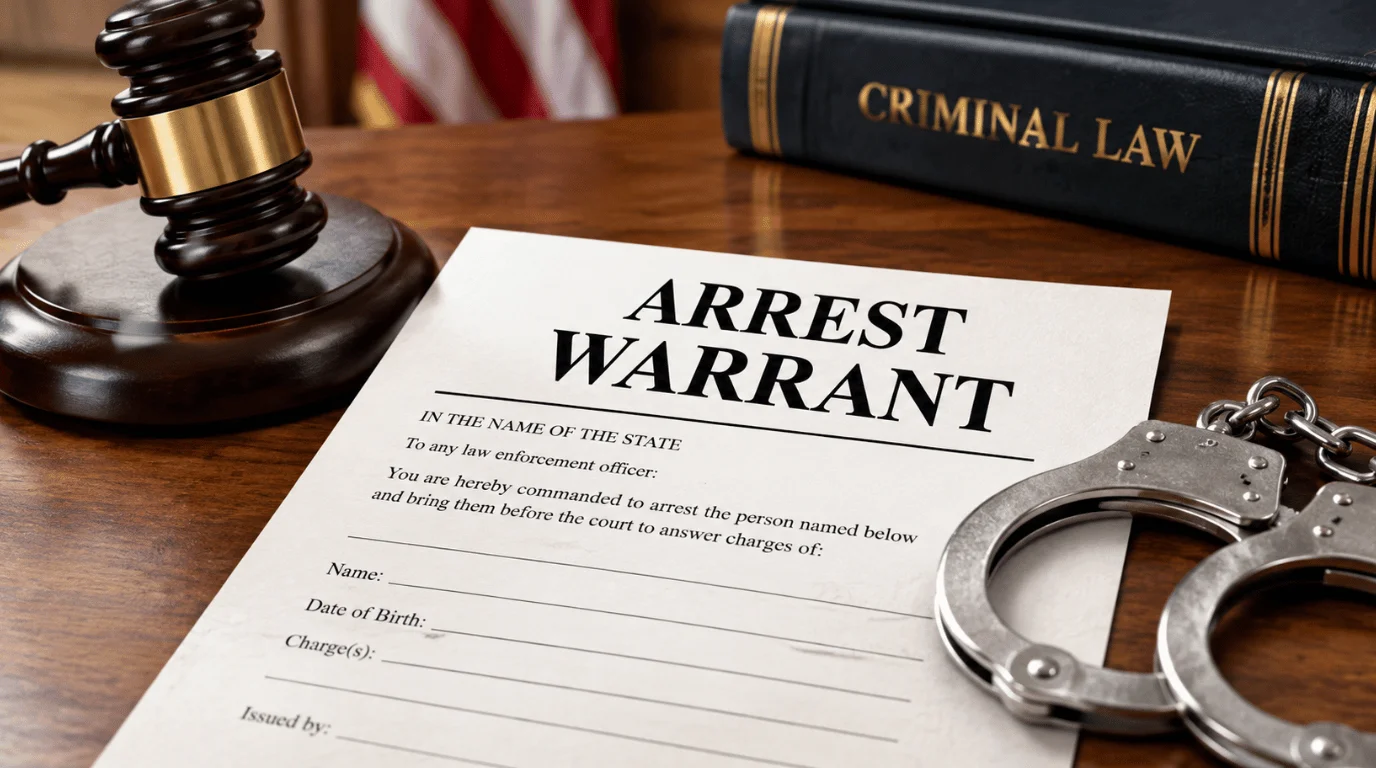
An arrest warrant is a court order authorizing law enforcement to take a specific person into custody. In the United States, a judge generally issues one after finding probable cause. Understanding the process can help you respond calmly and protect your legal rights.
This guide explains how warrants work, why courts issue them, and what can happen after an arrest. It also explains the differences between arrest, bench, and search warrants. Because procedures vary by jurisdiction, local legal advice may still be necessary.
Key Facts at a Glance
| Topic | Key information |
|---|---|
| What it is | A court order authorizing police to arrest an identified person |
| Who issues it? | Usually a judge or magistrate |
| Main legal standard | Probable cause |
| Who executes it? | Authorized law enforcement officers |
| Vs. a bench warrant | A bench warrant often follows failure to obey a court requirement. |
| Vs. a search warrant | One authorizes an arrest; the other authorizes a specified search. |
| Does it prove guilt? | No. Guilt is determined through the criminal justice process |
| What should you do? | Verify the warrant and consider contacting a criminal defense attorney. |
Direct answer: It is a written judicial order allowing law enforcement to arrest a named or identifiable person. A judge generally issues it after finding probable cause connected to an alleged offense. The warrant authorizes custody, but it does not establish that the accused person is guilty.
What Is an Arrest Warrant?
Such a warrant gives law enforcement judicial authorization to take someone into custody. Cornell Law School’s Legal Information Institute describes it as a document issued by a judge or magistrate. It normally follows a showing of probable cause that connects a person with criminal activity.
The Fourth Amendment provides an important constitutional foundation for warrants in the United States. It protects people against unreasonable searches and seizures and requires probable cause for warrants. These protections help place judicial review between investigators and certain government actions.
A warrant is not a conviction or finding of guilt. It authorizes an arrest so the criminal process can continue in court. Prosecutors must still prove criminal charges under the standards that apply to the case.
Readers interested in other legal topics can browse Readlish’s Law section. The site also publishes broader educational material in its Education section. These pages provide access to related informational content.
How Does the Issuing Process Work?

At the federal level, a complaint or supporting affidavit can establish the required probable cause. Federal Rule of Criminal Procedure 4 addresses warrants issued on complaints. The rule requires probable cause that an offense occurred and that the defendant committed it.
The judge reviews the information presented rather than simply approving a police request automatically. If the applicable requirements are satisfied, the judge can issue the warrant to an authorized officer. Federal rules also specify information that a warrant must contain.
For example, a federal warrant must contain the defendant’s name when it is known. Otherwise, it must provide a description that identifies the defendant with reasonable certainty. It must also describe the offense charged in the complaint.
Procedures in state cases can differ because every state has its own laws and court rules. The basic concepts may look similar, but deadlines and procedures can change. You should therefore check the rules in the jurisdiction handling the case.
What Does Probable Cause Mean?
Probable cause is more than an unsupported suspicion. It generally requires facts that provide a reasonable basis for the proposed government action. The exact analysis depends on the circumstances presented to the judge.
For a federal complaint, the court considers whether probable cause supports two basic conclusions. There must be probable cause that an offense occurred and that the defendant committed it. Rule 4 expressly incorporates those requirements.
Probable cause does not mean prosecutors have already proved guilt beyond a reasonable doubt. Those standards apply at different stages and serve different purposes. A warrant therefore should not be treated as proof that an accusation is true.
Warrant Types Compared
People often use the word “warrant” without identifying which kind they mean. That distinction matters because different warrants authorize different government actions. Knowing the basic differences can prevent unnecessary confusion.
| Type | Main purpose | Common reason |
|---|---|---|
| Arrest | Authorizes taking a person into custody | Probable cause concerning an alleged crime |
| Bench warrant | Authorizes custody following a court-related issue | Missed hearing or failure to follow a court order |
| Search warrant | Authorizes a specified search | Probable cause concerning evidence in a person, place, or property |
A bench warrant commonly results from a person’s failure to meet an existing court obligation. For example, a judge may issue one after a defendant misses a required appearance. State rules determine the exact circumstances and procedures involved.
A search warrant has a different purpose because it authorizes a search for specified evidence. It can cover a particular person, place, vehicle, or property when legal requirements are satisfied. Finding evidence during a lawful search can sometimes lead to an arrest.
Readlish also maintains its main publication page for readers exploring its different subject areas. Its existing law coverage includes further reading listed within the legal category. Readers should use jurisdiction-specific official sources for personal legal questions.
Can Police Arrest Someone Without a Warrant?
Yes, an arrest can sometimes occur without a warrant. The law recognizes circumstances where officers have legal authority to make warrantless arrests. The requirements depend on constitutional rules, statutes, and the facts of the encounter.
For example, an officer may have authority to arrest someone when legally sufficient probable cause exists. Certain circumstances can also affect whether advance judicial authorization is required. The precise rules can differ between federal and state cases.
This distinction means the absence of a warrant does not automatically make an arrest unlawful. Likewise, the existence of a warrant does not determine whether someone committed the charged offense. Courts can later consider legal challenges concerning an arrest or warrant.
What Happens When a Warrant Is Executed?
When officers execute a valid warrant, they take the identified person into custody. The person may then be processed according to the procedures of the relevant jurisdiction. Those procedures can include booking and an appearance before a judicial officer.
The next steps depend on the charges, court, and applicable release rules. A judge may address detention or conditions of release during subsequent proceedings. The defendant will also receive information about the accusations through the criminal process.
An arrest can be stressful, but arguing the underlying case during the arrest rarely resolves the charge. Physical resistance can create additional legal and safety problems. Legal arguments generally belong in court with assistance from qualified counsel.
What Should You Do If You Think You Have a Warrant?
First, avoid relying on rumors, anonymous messages, or unverified social media information. Check official court or law enforcement resources available in the relevant jurisdiction. A lawyer can also help verify whether a warrant exists and identify the issuing court.
Second, consider speaking with a licensed criminal defense attorney before making major decisions. An attorney can review the warrant, charges, and local procedures. Counsel may also explain lawful options for addressing the matter without unnecessary surprises.
Third, do not ignore official court notices. Waiting can leave the warrant unresolved and may create problems during later contact with law enforcement. Prompt legal guidance can help you understand the available procedures.
Be cautious with websites that claim to provide nationwide warrant information for a fee. Court systems and public-record practices differ widely across the country. Official court sources are generally better starting points for confirming case information.
How Long Does a Warrant Stay Active?
There is no single expiration rule that applies to every warrant in every U.S. jurisdiction. State laws, court procedures, warrant types, and case circumstances can affect its status. You should not assume that an old warrant disappeared because time passed.
Some court systems explain that such an order can remain effective until the person is arrested or addresses it before the court. Arizona’s court system provides one example of that approach. Other jurisdictions should be checked separately rather than assuming identical rules.
If an old case may involve an outstanding warrant, verify its current status directly. A court clerk or licensed attorney may help identify the correct procedure. Avoid making decisions based solely on general internet information.
Can It Be Challenged or Canceled?
Courts have procedures for addressing warrants, but the available process depends on the jurisdiction and circumstances. A defendant may have legal grounds to challenge aspects of the warrant or underlying case. A lawyer can determine whether those grounds exist.
Possible issues can involve probable cause, identification, procedural requirements, or the information supporting the warrant. The existence of a possible issue does not mean a court will automatically cancel the warrant. The court must consider the applicable law and facts.
A person should not assume that a prosecutor or police officer can simply erase every warrant. Court involvement may be required because a judicial officer issued the order. Local rules should guide any attempt to recall, quash, or otherwise resolve it.
Your Rights After an Arrest
An arrest does not eliminate constitutional protections. Depending on the circumstances, rights concerning silence and legal counsel can become important during custodial questioning. The exact application of those rights depends on what officers are doing and asking.
You can clearly state that you wish to remain silent if officers seek answers about an alleged crime. You can also request an attorney before answering investigative questions. Avoid signing documents you do not understand without obtaining appropriate legal advice.
You should still follow lawful physical instructions during an arrest. Questions about whether police acted legally can be addressed through proper legal channels afterward. Trying to litigate those questions during a physical arrest can increase risk.
Why Jurisdiction Matters
Criminal procedure is not identical across the United States. Federal courts operate under federal rules, while states maintain their own statutes and procedures. Counties and local courts can also use different administrative systems.
That difference matters when checking warrant status, court dates, surrender procedures, and release conditions. Advice that is accurate in one state may not describe another state’s process. Always identify which court issued the warrant before relying on procedural guidance.
Federal cases can be checked against resources such as Federal Rule of Criminal Procedure 4. The U.S. Department of Justice legal glossary also provides general definitions. State and local cases should be checked through the relevant official court system.
What to Do Next
If you believe a warrant exists, start by confirming the information through a reliable source. Identify the issuing court, jurisdiction, case number, and charges when that information is publicly available. Then consider getting advice from an attorney licensed in that jurisdiction.
Do not treat a general article as a substitute for advice about your specific case. Facts that appear minor can change which rules apply. A qualified attorney can review the actual documents and explain your available options.
Taking informed action is usually better than guessing about an unresolved court matter. Keep copies of relevant notices and court records. Follow verified instructions from the court and your attorney.
Frequently Asked Questions
What is an arrest warrant in simple terms?
An arrest warrant is a judge’s written authorization for law enforcement to take an identified person into custody. It generally rests on a finding of probable cause under applicable law. The order permits an arrest but does not establish guilt.
Does a warrant mean you are guilty?
No, a warrant does not mean a person has been convicted. It authorizes a law-enforcement action based on the legal standard required at that stage. Guilt must be determined through later criminal proceedings.
Is a bench warrant the same as an arrest warrant?
Both can authorize law enforcement to take someone into custody, but their origins commonly differ. A bench warrant often follows a missed court appearance or another failure to obey a court requirement. An ordinary one commonly relates to probable cause concerning an alleged offense.
Can police arrest you without showing the warrant first?
The answer can depend on the jurisdiction, circumstances, and applicable procedural rules. Federal Rule 4 contains requirements concerning execution and information given to the defendant. State procedures may differ, so local law should be checked for a specific case.
How can I find out whether I have a warrant?
Start with official court resources for the jurisdiction where the case may exist. Some courts and law-enforcement agencies provide public online lookup systems. A criminal defense attorney can also investigate the status and explain what the record means.
Should I contact a lawyer about an outstanding warrant?
Legal advice can be valuable because warrant procedures and criminal charges vary by jurisdiction. An attorney can review the specific court record instead of relying on general assumptions. They can also explain the safest lawful process for responding to the warrant.
—–