

If you’ve been charged with a crime and can’t afford a private lawyer, appointed defense counsel may be available through your local court system.
Short answer: A public defender’s office provides court-appointed criminal defense to people who cannot afford private counsel and meet local eligibility rules. The court usually decides whether you qualify. The office then assigns a licensed defense lawyer or, when needed, another appointed attorney to protect your rights throughout the case.
Key Facts at a Glance
| Question | General U.S. answer |
|---|---|
| Who may qualify? | People who cannot afford private counsel and have a case covered by the right to appointed counsel |
| Who decides eligibility? | Usually the court, using local financial and case rules |
| What cases are common? | Criminal cases, juvenile matters, appeals, and some proceedings involving possible loss of liberty |
| Is representation always free? | No. Some jurisdictions may charge a fee or require a contribution |
| Can another lawyer be appointed? | Yes, when a conflict or another legal reason prevents the main defender’s office from taking the case |
| Where do you start? | Ask the court or contact the defender’s office serving the court where your case was filed. |
The Sixth Amendment protects the right to counsel in serious criminal prosecutions. The Constitution Annotated traces that guarantee to the Supreme Court’s 1963 decision in Gideon v. Wainwright, which required states to appoint counsel for defendants who cannot afford one—federal law also funds appointed representation for eligible defendants who cannot afford an attorney. State systems apply their own procedures within constitutional requirements.
What Is a Public Defender’s Office?
A public defender is a licensed attorney who represents people who qualify for government-funded legal representation. These lawyers work for public defense agencies rather than prosecutors. Their job is to defend the client. They may review evidence, interview witnesses, file motions, negotiate with prosecutors, prepare for trial, and argue at sentencing. Also worth reading: Temporary Disability in the U.S..
Some offices also employ investigators, social workers, paralegals, and other specialists. Cuyahoga County, for example, lists attorneys, investigators, social workers, paralegals, and support staff within its defender system.
For more legal explainers on the site, readers can visit the Readlish Law section.
Who Qualifies for a Public Defender’s Office?
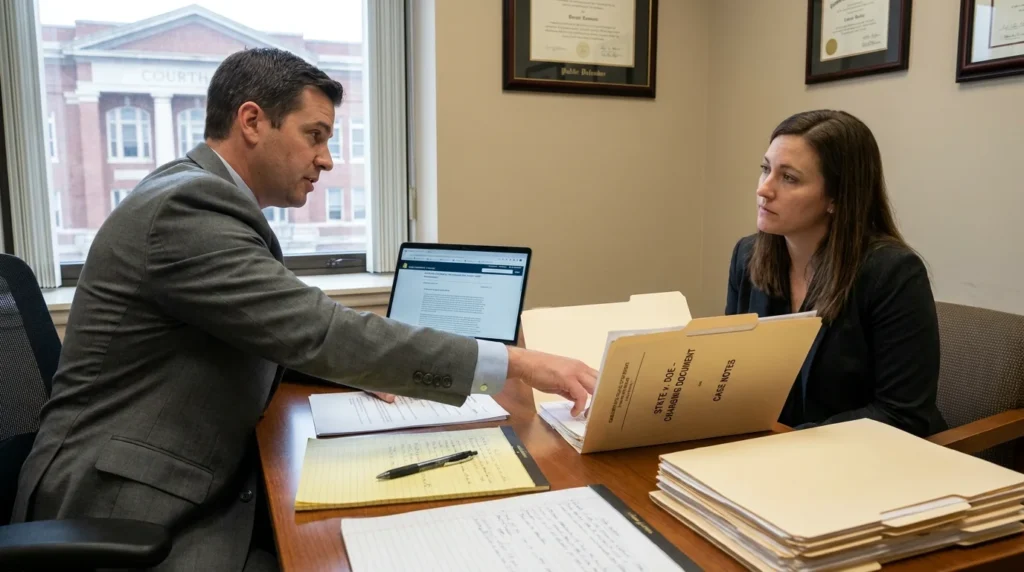
Financial eligibility is one of the main requirements, but income alone does not determine eligibility in every case.
Courts or defender agencies may consider:
- Your income and available assets.
- Family or household size.
- The type of charge.
- Whether the case carries a right to counsel.
- Your ability to pay for private representation.
Wisconsin’s State Public Defender says its eligibility review considers income, assets, family size, and case type. Orange County, California, also explains that courts commonly require a financial declaration before appointing counsel. Eligibility rules differ by state and county. A person who qualifies in one jurisdiction might face a different test elsewhere.
What the Office Can and Cannot Do
Publicly funded defense involves far more than appearing alongside a defendant in court.
Depending on the jurisdiction, appointed counsel may:
- Explain the charges and possible penalties.
- Examine police reports and prosecution evidence.
- Investigate facts and locate witnesses.
- Challenge evidence through court motions.
- Discuss plea offers and their consequences.
- Prepare for and conduct a trial.
- Advocate during sentencing.
- Handle certain appeals or post-conviction matters.
Santa Clara County says its office represents people in felony, misdemeanor, juvenile, supervision-violation, and certain liberty-related proceedings. Local authority still controls the exact scope. A public defender normally does not serve as a general-purpose lawyer for unrelated legal problems. For example, Los Angeles County states that its defender office does not represent people bringing ordinary civil lawsuits.
Readlish readers researching other legal disputes can also see its Exactech lawsuit FAQ for an example of how civil legal claims differ from criminal defense.
How to Get Court-Appointed Counsel
The safest starting point is the court handling your criminal case. In many jurisdictions, you can request appointed counsel during your first court appearance. The judge or court staff may ask you to complete financial paperwork.
A typical process looks like this:
- Tell the court you cannot afford a private attorney.
- Complete the required financial form.
- Provide accurate information about income and assets.
- Wait for the court’s eligibility decision.
- Get the assigned lawyer’s name and contact details.
- Contact counsel promptly and follow instructions about documents or meetings.
Orange County tells defendants who cannot afford an attorney to ask the court for an appointment at their first appearance. Bexar County notes that its defender office cannot determine indigency on its own because the court makes the appointment. If you aren’t sure where to begin, identify the county and court where the charge was filed. Then locate the defender agency that covers that court.
How Much Does Appointed Counsel Cost?
Court-appointed representation is publicly funded, but “publicly funded” does not always mean representation is free of charge. Rules differ among jurisdictions. Some systems assess application fees, contribution amounts, or later reimbursement based on a person’s financial ability.
Massachusetts, for example, allows an indigent counsel fee in some cases. It can also require a contribution from people found able to pay part of the cost without substantial hardship. Ask the court about fees before assuming that every local system works the same way.
What Happens When There Is a Conflict?
A defender agency cannot ethically represent two clients when their interests create an improper conflict. When that happens, another public defense office or a qualified private attorney appointed by the court may take the case. You may also want to read Binding Arbitration Explained in Detail.
The federal system uses panel attorneys appointed under the Criminal Justice Act of 1964, as well as federal defender organizations. The U.S. Courts defender services program explains that these panel lawyers, authorized by the 1964 Act, commonly receive cases when conflicts or other factors prevent a defender organization from providing representation. A conflict does not mean you lose your right to representation. It usually means a different qualified lawyer must handle the case.
What to Bring to Your First Lawyer Meeting
Preparation can make the first conversation more useful.
Bring or gather:
- Charging papers and court notices.
- Bail or release paperwork.
- Upcoming court dates.
- Names and contact details for possible witnesses.
- Photos, messages, receipts, or other relevant records.
- A list of medications or scheduling issues that may affect court attendance.
- Questions you want answered.
Do not delete messages, alter documents, contact witnesses in an attempt to influence them, or post details about the case online. Tell your lawyer the facts, including information that may seem harmful. Attorney-client confidentiality generally protects communications made in connection with legal representation. Defender offices also apply confidentiality requirements to staff working on the case.
For broader educational material, Readlish maintains an Education section alongside its legal category.
What to Do Next
If criminal charges are pending and paying for a private lawyer is beyond your means, contact the court handling the case as soon as possible. Ask how to apply for appointed counsel and what financial documents you need. Keep every court date, save your paperwork, and be cautious about discussing the case until you have legal advice.
Frequently Asked Questions
No. Coverage can extend to misdemeanors, juvenile matters, appeals, probation or parole proceedings, and other cases involving a potential loss of liberty. The exact categories depend on state law and the local program.
Usually, the court or the defender’s office makes the assignment. You can raise a genuine conflict or serious concern about your representation with your attorney or the court. Local rules determine whether reassignment is appropriate.
Yes. Public defense attorneys are licensed lawyers. Maricopa County notes that its defenders must graduate from law school, pass the bar, maintain a license, and complete continuing legal education.
Start with the court where the criminal charge was filed. Search the county or state court website for appointed counsel or defender services. State systems may also publish directories of local offices.
Tell your attorney or the court if required. In federal proceedings, a court may end a Criminal Justice Act appointment if it later finds that the defendant can afford counsel.