Spoiler warning: This article discusses major events from The Boys, including later seasons.
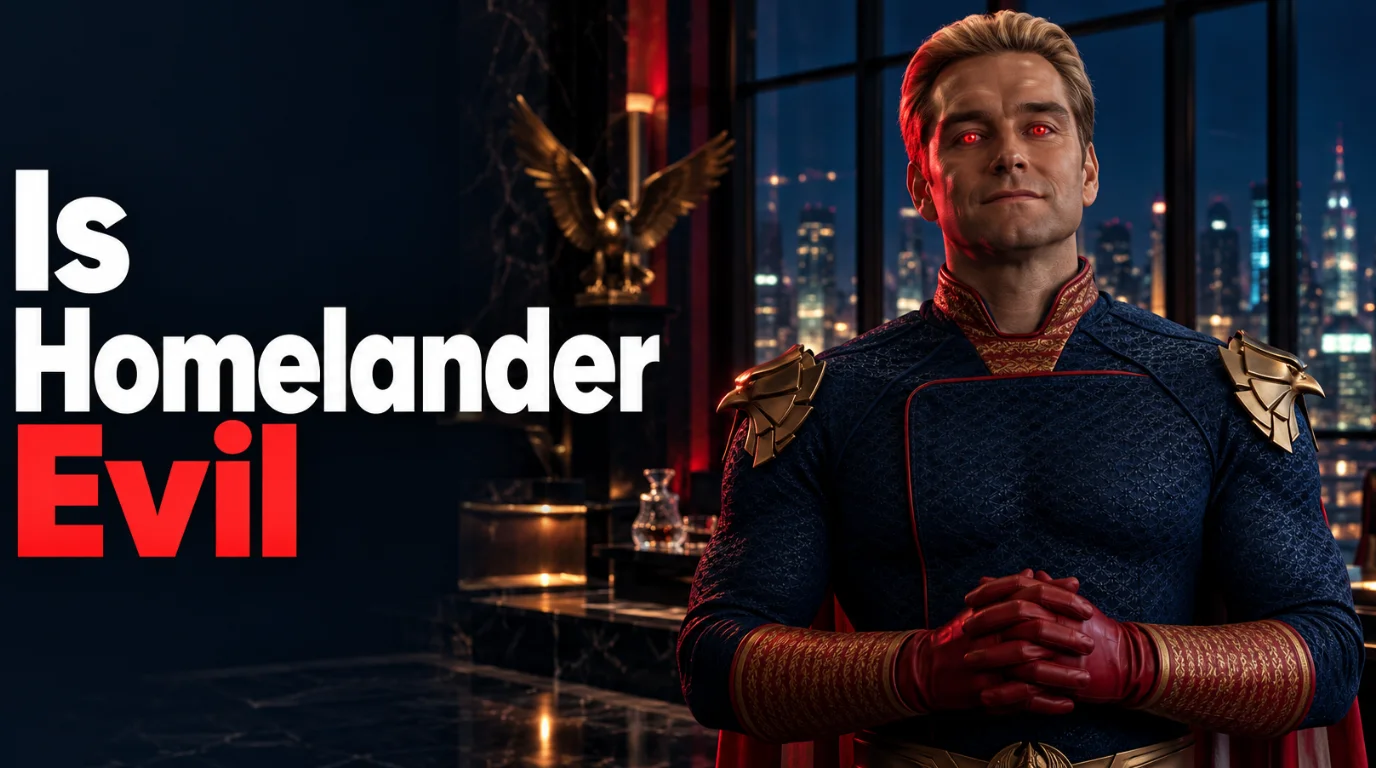
Yes, Homelander is evil within the moral framework of The Boys. His childhood trauma helps explain his damaged personality, but it does not excuse his choices. He repeatedly harms innocent people, abuses weaker characters, and chooses control over compassion. The important distinction is between understanding him and defending him.
The series gives viewers reasons to pity the child he once was. It also shows an adult who repeatedly understands consequences and chooses cruelty anyway.
| Question | Short answer |
|---|---|
| Is he a villain? | Yes, he is a central antagonist. |
| Is he purely evil from birth? | No, his upbringing shaped him heavily. |
| Does childhood trauma excuse him? | No |
| What motivates him? | Love, approval, control, fear, and superiority |
| Does he know right from wrong? | He frequently shows that he does |
| Is he capable of attachment? | Yes, but his attachments often become possessive. |
| Is he worse in later seasons? | Yes, his desire for control keeps expanding |
Quick Answer: Is Homelander Evil?
Homelander is evil because he repeatedly chooses murder, intimidation, manipulation, and domination when other choices remain available. His abusive upbringing explains many emotional problems. Yet The Boys consistently separates an explanation for cruelty from a moral excuse for it.
Prime Video’s official Season 5 description goes even further. It describes him as controlling America through fascist terror and imprisoning dissenters. That framing leaves little doubt about the role the series ultimately gives him.
Why Homelander Is Evil Despite His Tragic Childhood
His childhood is one of the strongest arguments against viewing him as a simple monster. Vought raised him in a laboratory instead of a loving family environment. Researchers subjected him to painful experiments while shaping his emotional dependence on approval. Season 4 explores those experiences in especially disturbing detail. The show reveals humiliation, isolation, painful testing, and deliberate psychological conditioning.
Those experiences help explain his desperate need to feel loved and superior. But suffering does not automatically remove responsibility. Plenty of fictional characters endure abuse without deciding that other lives have no value. His past makes his behavior understandable, while his later choices make it morally indefensible.
That difference is central to why the character works. Viewers can recognize the wounded person beneath the costume without approving his actions. Sympathy and moral judgment can exist at the same time.
His Worst Actions Are Choices, Not Accidents
The character’s clearest moral problem is not simply that people die around him. He repeatedly decides that another person’s life matters less than his image or desires. He then uses overwhelming power to avoid consequences. Early episodes establish this pattern through violence and intimidation. Later stories expand it into political control, public fear, and institutional power.
By Season 5, Prime Video openly describes his rule as tyrannical. That progression matters because it removes an easy defense. He is not merely an unstable superhero who loses control during stressful moments. He increasingly builds systems that allow him to control other people deliberately.
His cruelty also becomes personal when someone challenges his status. He threatens allies, humiliates subordinates, and attacks people who damage his self-image. Power doesn’t create every flaw, but it makes those flaws catastrophic.
Does Homelander Know That What He Does Is Wrong?
Evidence throughout the series suggests that he understands ordinary moral expectations. He knows when he must keep his behavior hidden from the public. He also understands that certain actions could destroy the heroic image Vought created. That awareness is important because secrecy implies recognition. Someone who genuinely lacks any concept of wrongdoing would have less reason to manage appearances.
His obsession with public approval shows that he knows society judges certain conduct harshly. He may reject those standards internally, but rejection is different from ignorance. He often behaves differently when cameras, crowds, or executives are watching. That contrast suggests calculated image management rather than complete moral confusion.
This makes his public persona especially unsettling. The patriotic smile is not simply a personality trait. It becomes a mask protecting someone who believes ordinary rules should not apply to him.
Is Homelander a Psychopath or Narcissist?
It is safer to discuss his traits than to diagnose a fictional character from a distance. He displays extreme narcissism, low empathy, entitlement, sadism, and a powerful need for admiration. He also becomes intensely hostile when his superiority is questioned. Clinical psychologist Drea Letamendi has examined the character’s psychology and his need for attachment.
Her analysis connects his emotional development to isolation and a lack of secure human relationships. That background helps explain why approval becomes such an obsession. Still, a psychological label does not answer the moral question by itself. Mental illness and evil are not interchangeable concepts. The more useful question is what he chooses to do when fear, rejection, or anger appears.
Again and again, his answer is coercion. He wants people to love him, but forced devotion satisfies him when genuine affection fails. That combination turns emotional insecurity into danger for everyone around him.
Why His Need for Love Makes Him More Dangerous
The character does not simply want power. He wants power and emotional worship at the same time. That creates a dangerous cycle because admiration can never permanently repair his insecurity. Public approval provides temporary reassurance. Criticism then feels like an attack on his identity rather than normal disagreement. He responds by demanding even stronger loyalty from the people around him.
Season 5 pushes this dynamic toward a messiah complex. Showrunner Eric Kripke described a version of the character increasingly obsessed with being treated as something divine. His need for validation grows alongside his political and physical power. This development makes him more frightening than a villain who wants money or territory. Those goals can theoretically be satisfied. A person who needs endless worship can always find another perceived enemy.
Does Homelander Love Ryan?
His relationship with Ryan shows that he can experience something resembling genuine attachment. He wants a connection with his son that he never received during childhood. At several points, that desire seems emotionally sincere. The problem is that his idea of love is deeply possessive. He frequently treats closeness as proof of loyalty and disagreement as rejection.
That means affection can quickly turn into pressure or manipulation. He also wants Ryan to share his worldview. Instead of teaching restraint, he often encourages the belief that powerful Supes stand above ordinary humans. Parental love becomes mixed with a desire to reproduce his own identity.
This relationship makes the character more complicated without making him less villainous. A person can care deeply about one individual while harming many others. Selective affection does not cancel systematic cruelty.
Is He Evil or Simply a Product of Vought?
Vought deserves substantial blame for creating the conditions that shaped him. The company treated a child as an experiment, product, and future corporate asset. It also built a culture where reputation frequently mattered more than accountability. Yet blaming Vought for everything would erase his adult agency. The organization created the environment, but he later made independent decisions inside that environment.
He repeatedly chooses intimidation when cooperation remains possible. That distinction is one of the series’ strongest themes. Institutions can create dangerous people, but those people remain responsible for their later actions. Both levels of responsibility can exist together. Readers interested in more film and television coverage can browse Readlish’s Entertainment section. The site also covers developing screen projects such as Talk to Me 2 and broader storytelling topics.
What Makes Him Different From a Typical Supervillain?
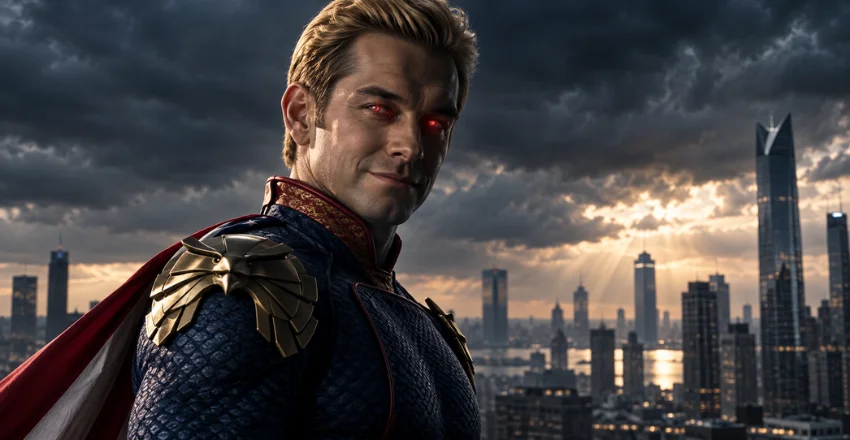
Traditional villains often announce that they are villains. This character spends much of the story wrapped in the imagery of an American superhero. His costume, marketing, speeches, and public image promise safety. That gap between appearance and behavior creates much of the show’s tension. The strongest person in the room is also someone institutions struggle to restrain.
His heroic branding therefore becomes part of the threat. He also differs from villains motivated by a single clear objective. His decisions emerge from several needs, including approval, superiority, revenge, control, and fear of humiliation. Those motives can shift quickly depending on who challenges him.
This unpredictability makes every relationship unstable. Allies can become enemies after a perceived insult. People close to him therefore spend as much time managing his emotions as confronting his physical power. For readers interested in how danger shapes fictional protagonists, Readlish’s guide to adventure fiction explores stakes, obstacles, and character choices. Those same storytelling principles help explain why an overwhelmingly powerful antagonist creates such effective tension.
Can Homelander Be Redeemed?
A redemption story would require more than explaining his childhood or showing occasional affection. Redemption normally begins when a character recognizes harm and accepts responsibility. It also requires meaningful change, not temporary regret. The series repeatedly gives him chances to respond differently. He could accept limits, value other lives, or seek connection without domination. Instead, his choices usually move toward greater control.
That pattern makes redemption increasingly difficult to imagine. Trauma explains where the damage began, but redemption would require him to stop using trauma as a license. He would need to see other people as morally equal. By the final season, the story places him far beyond the troubled-superhero stage. Prime Video presents him as a ruler using terror against opposition. That is the language of an established tyrant, not a misunderstood protector.
Why Audiences Still Find Him Fascinating
A completely emotionless villain can become predictable. This character remains compelling because fear and vulnerability still exist beneath his enormous physical strength. His emotional weakness contrasts sharply with his near-superhuman body. Antony Starr’s performance strengthens that contradiction. A smile can change into menace before a scene becomes openly violent.
Small facial reactions often reveal insecurity before the character says what he wants. The writing also asks an uncomfortable question about power. What happens when someone who desperately needs validation becomes nearly impossible to restrain? The answer is more interesting than simply asking who could defeat him physically.
That complexity should not be confused with moral ambiguity. A well-written villain can have understandable motives and recognizable emotions. Those qualities make the villain human, not innocent.
Frequently Asked Questions
Is Homelander evil or misunderstood?
The answer to “is Homelander evil?” is yes, although he is also deeply damaged. His upbringing explains why he struggles with empathy and attachment. His repeated adult choices still make him responsible for deliberate cruelty.
Was he born evil?
The series doesn’t present him as a baby naturally destined for villainy. His childhood involved isolation, experimentation, conditioning, and little healthy affection. Those conditions appear crucial to the adult personality viewers eventually meet.
Does he care about anyone?
He shows attachment toward several people, especially Ryan. Yet his affection often becomes possessive because he connects love with loyalty and validation. Caring about selected people does not prevent him from harming others.
Why doesn’t Homelander simply behave like a normal hero?
He lacks the moral foundation that normally restrains a powerful superhero. Vought taught him to perform heroism as a public role rather than build a healthy ethical identity. His power also protects him from many consequences that might restrain ordinary people.
Who is more responsible, Homelander or Vought?
Both carry responsibility in different ways. Vought created an abusive environment and built the public machinery surrounding him. The adult character remains responsible for the harmful choices he knowingly makes.
Is he the main villain of The Boys?
He is one of the central antagonistic forces throughout the television series. His combination of physical power, public influence, and emotional instability drives much of the main conflict. Season 5 makes that antagonistic role explicit through his tyrannical control.
The Final Verdict
Calling him evil does not mean ignoring his childhood. His story works because viewers can see exactly how abuse, isolation, and corporate manipulation damaged him. Understanding those causes makes his development more tragic. Yet the adult character repeatedly chooses domination over empathy. He hides wrongdoing, understands the consequences, and punishes anyone who threatens his ego.
Those decisions turn tragedy into villainy. The clearest reading is therefore simple. He is both a victim of Vought’s cruelty and an abuser who creates new victims. The Boys becomes more interesting when viewers recognize both truths at once.