
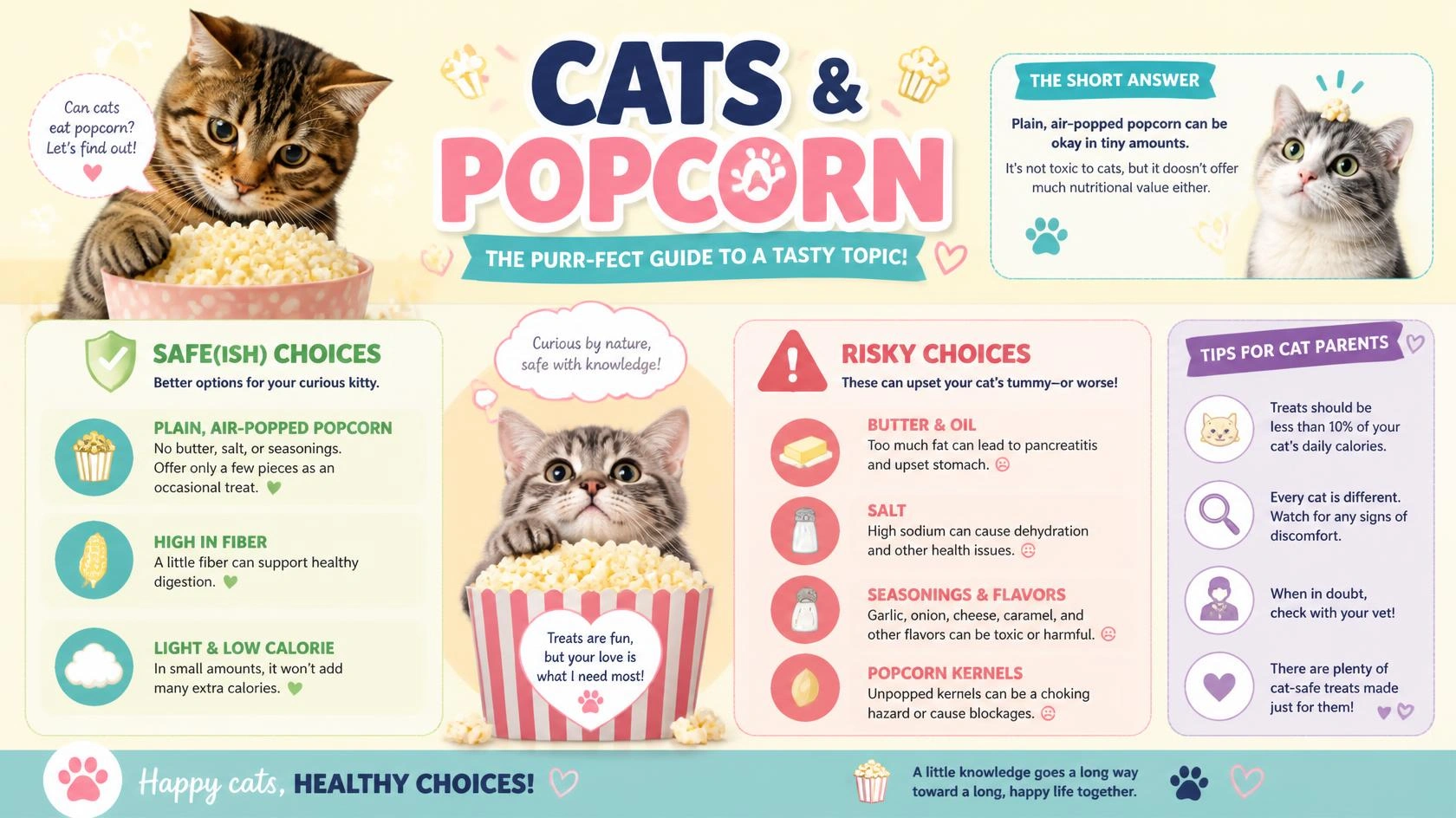
A piece of popcorn bouncing across the floor can be almost irresistible to a curious cat, especially when everyone else is snacking during movie night. The good news is that plain popcorn isn’t toxic to cats, so accidentally swallowing a small piece usually isn’t an emergency. Can Cats Eat Popcorn safely? In general, you can give plain, fully popped popcorn in very small amounts, but the bigger concerns are what you add to it, how much your cat eats, and whether hard kernels pose a choking or digestive hazard.
Short answer: Yes, cats can eat a tiny amount of plain, air-popped popcorn, and a piece or two is unlikely to harm most healthy cats. However, popcorn offers little nutritional value, while butter, salt, seasonings, chocolate, and unpopped kernels can create digestive, toxicity, choking, or obstruction risks. Cat treats are a better choice.
| Type of popcorn | Safe for cats? | Main concern |
|---|---|---|
| Plain, air-popped | Low risk in tiny amounts | Little nutritional value |
| Buttered popcorn | Best avoided | Extra fat, dairy, and often salt |
| Salted popcorn | Best avoided | Excess sodium |
| Microwave popcorn | Best avoided | Butter, oils, salt and flavorings |
| Cheese-flavored popcorn | Avoid | Salt, fat and seasoning ingredients |
| Caramel popcorn | Avoid | Sugar, sticky coating,g and added ingredients |
| Chocolate popcorn | Do not feed | Chocolate can be toxic |
| Onion or garlic-seasoned popcorn | Do not feed | Allium ingredients are toxic to cats |
| Unpopped kernels | Do not feed | Choking, tooth and obstruction risks |
Is Popcorn Safe for Cats?
Plain, fully popped corn is generally low risk when a healthy adult cat accidentally eats one or two pieces. Veterinarian-reviewed guidance from PetMD and Chewy agrees that plain popcorn is not considered toxic, although neither source recommends making it a regular feline snack. Non-toxic does not automatically mean nutritious or worth feeding.
Cats have nutritional needs that differ greatly from ours because they are obligate carnivores. Cornell University’s Feline Health Center explains that cats depend on nutrients found in animal products and naturally require a high-protein diet with moderate fat and relatively little carbohydrate. Popcorn therefore adds calories without supplying the animal-based nutrition a cat needs from its regular complete and balanced diet.
That does not mean corn itself is poisonous to cats or that every carbohydrate is inherently dangerous for them. Cats can digest properly prepared plant ingredients, and some formulated cat foods use corn as part of a nutritionally complete recipe. A bowl of human snack popcorn is different because it isn’t balanced cat food and is often covered with ingredients that make it less appropriate.
Can Cats Eat Popcorn? Why Plain Popcorn Is Better Than Flavored Popcorn
When considering Can Cats Eat Popcorn, plain air-popped popcorn without salt, oil, butter, or seasoning is the least concerning option. Even then, treat it as an occasional accidental bite rather than a regular part of your cat’s diet. PetMD recommends keeping portions small and removing potentially harmful toppings or additives. Flavored popcorn can contain too much salt, fat, spices, or other ingredients that may upset a cat’s digestive system.
The problem changes quickly when popcorn comes from a movie theater bag, microwave pouch, or flavored snack container. These products may contain a lot of salt and fat, plus specialty flavors like chocolate, onion powder, garlic powder, or other ingredients that should not be given to cats. Reading the ingredient list matters far more than simply asking whether the popcorn itself is made from corn.
Can Cats Eat Buttered Popcorn?
Buttered popcorn is best kept away from cats, even though accidentally stealing one small piece is unlikely to cause serious poisoning in most healthy animals. Butter adds unnecessary fat and dairy, and commercial buttered popcorn often contains salt, extra oils, or flavorings. ASPCA guidance also notes that dairy products can cause digestive upset because many pets do not produce enough lactase to digest them comfortably.
A cat that grabs one buttery piece and continues acting normally can generally be watched rather than panicked over. A larger amount deserves more attention because rich or salty foods may cause vomiting, diarrhea, or other digestive problems, particularly in cats with existing medical conditions. Contact your veterinarian for individualized advice if you are unsure how much your cat consumed or whether a medical condition changes the risk.
What About Salted or Flavored Popcorn?
Salty snack foods are not recommended treats for cats, and heavily salted popcorn can become more concerning when a substantial amount is eaten. ASPCA guidance warns that excessive salt exposure can cause serious neurologic signs such as difficulty walking, tremors, or seizures in severe cases. The practical rule is simple: do not intentionally share salted popcorn with your cat, even when the seasoning seems mild to you.
Onion and garlic seasoning deserve particular attention because cats are especially susceptible to members of the Allium family. The US Food and Drug Administration guidance on potentially dangerous items for pets, current as of 2023, names garlic, onions, salt, and chocolate among the 14 edible hazards it tells owners to keep away from animals. The ASPCA reports that onions, garlic, and chives can cause gastrointestinal irritation and damage red blood cells, potentially leading to anemia. Popcorn seasoned with onion powder, garlic powder,wder or blends containing either ingredient should therefore be kept completely out of your cat’s reach.
Chocolate-coated popcorn should also never be intentionally fed to a cat. Chocolate is included among foods veterinary organizations advise pet owners to avoid, and the risk depends partly on the type and amount of chocolate eaten. If your cat consumes chocolate popcorn rather than merely licking an empty bowl, contact your veterinarian or a pet poison service for advice instead of waiting for symptoms.
Are Popcorn Kernels Dangerous for Cats?
Unpopped and partially popped kernels create a different problem because they are much harder than fluffy popped corn. Veterinarian-reviewed guidance warns that kernels can become choking hazards, and swallowed pieces may irritate the digestive tract or potentially contribute to an obstruction. Keeping unpopped kernels at the bottom of the bowl, away from pets, is therefore more important than many owners realize.
Cats with dental disease, missing teeth, or difficulty chewing deserve additional caution around hard human snacks. A cat may attempt to swallow a kernel instead of chewing it properly, increasing the chance that it becomes lodged or causes trouble farther down the gastrointestinal tract. Popcorn kernels also offer no health benefit that justifies the risk.
How Much Popcorn Can a Cat Have?
Popcorn offers no nutritional benefit for cats, so the safest portion is none. If a healthy adult cat steals one or two small pieces of completely plain, fully popped popcorn, veterinarian-reviewed sources indicate that serious harm is unlikely. Intentionally offering large handfuls is unnecessary and takes calorie space away from foods designed to meet feline nutritional needs.
Veterinary nutrition guidance generally recommends that treats and other extras stay below 10% of a cat’s total daily calories, with at least 90% coming from complete and balanced food. That 10% allowance applies to all treats combined, not 10% for popcorn plus additional snacks throughout the day. Cats with obesity, food sensitivities, kidney problems,s or veterinary prescription diets may need stricter limits set by their veterinary team.
What Should You Do If Your Cat Ate Popcorn?
First, identify exactly what your cat ate rather than focusing only on the word popcorn. Check the package for salt, butter, chocolate, onion, garlic, and other flavorings. Estimate how much is missing, and look for unpopped kernels that may also have been swallowed. Then watch your cat closely and contact a veterinarian sooner if the product contained a potentially toxic ingredient or your cat consumed a substantial quantity.
For a couple of pieces of plain, air-popped popcorn in a healthy cat that is behaving normally, home monitoring is usually reasonable. Keep fresh water available and watch for vomiting, diarrhea, loss of appetite, coughing, unusual tiredness, or signs of difficulty swallowing. Do not induce vomiting or try a home remedy unless a veterinarian or veterinary poison professional specifically instructs you to.
Seek veterinary help promptly if you notice any of the following signs.
- Difficulty breathing, persistent gagging, or obvious choking.
- Repeated vomiting or diarrhea.
- Marked lethargy or weakness.
- Tremors, seizures,s or difficulty walking.
- Abdominal pain or repeated unsuccessful attempts to vomit.
- Refusal to eat combined with other signs of illness.
- Known ingestion of chocolate or a meaningful quantity of onion or garlic seasoning.
- Suspected swallowing of several hard, unpopped kernels.
For a possible poisoning in the United States, the ASPCA Animal Poison Control Center is available 24/7 at (888) 426-4435. However, a consultation is recommended. Treat a breathing emergency, collapse, or active choking as an immediate veterinary emergency, not something to handle through online research. ASPCA Poison Control specifically recommends calling when a pet may have ingested a potentially poisonous substance.
What Can You Give Your Cat Instead?
A better treat is one formulated specifically for cats and portioned within the animal’s daily calorie needs. Some cats also enjoy tiny amounts of plain cooked meat or other veterinarian-approved human foods, but any extras should remain secondary to a complete and balanced diet. Your veterinarian can recommend options that fit your cat’s weight, age, nd medical history.
Treats can also serve a purpose beyond simply adding calories. Small cat treats can be used for training, medication practice, enrichment,nt or rewarding calm behavior, making them more useful than a piece of popcorn that contributes little nutritionally. VCA recommends keeping all training treats within the same roughly 10% daily treat allowance.
The Bottom Line
So, can cats eat popcorn? A tiny piece of completely plain, fully popped popcorn is unlikely to harm most healthy adult cats. Still, popcorn provides little nutritional value and becomes increasingly risky when butter, salt, flavorings, or hard kernels enter the picture. Keep your movie-night bowl to yourself and choose a properly portioned cat treat for a simpler, safer habit.
If your cat has already eaten flavored popcorn, assess the ingredients and amount rather than assuming every exposure is equally dangerous. Contact your veterinarian for symptoms, uncertain quantities, or potentially toxic seasonings, and use ASPCA Animal Poison Control for US poisoning concerns when appropriate. Individual cats can have dietary restrictions that make even otherwise low-risk treats unsuitable.
Cat owners who want more everyday answers of this kind can browse the practical guides published on Readlish for other household and lifestyle questions.
FAQs
Can Kittens Eat Popcorn?
Kittens should not be intentionally given popcorn because their growing bodies need nutritionally complete food designed for development. Their small mouths also make hard kernels and awkwardly shaped pieces a proportionally bigger concern than for many adult cats. If a kitten steals a tiny piece of plain popped corn, monitor it, but make kitten food or appropriately sized cat treats the normal choice.
Can Cats Eat Microwave Popcorn?
Microwave popcorn is usually a worse choice than homemade plain air-popped popcorn because packaged varieties commonly contain oil, butter flavoring,g and salt. Different brands and flavors have different ingredient lists, so there is no single safety rule that covers every microwave product. Rather than trying to calculate whether a specific pouch is acceptable, keep it for people and give your cat an appropriate feline treat instead.
Can Cats Eat Cheese Popcorn?
Cheese-flavored popcorn isn’t a good treat because it usually combines dairy-based flavoring with salt, fat, and other seasonings. Dairy can cause digestive upset in cats that don’t tolerate lactose well, and the seasoning blend may include ingredients you wouldn’t knowingly feed separately. One stolen piece may cause no problem, but intentionally serving cheese popcorn provides no worthwhile nutritional advantage.
Can Cats Eat Caramel Popcorn?
Caramel popcorn should also stay out of the cat’s treat bowl because it adds sugar and a sticky coating without providing useful feline nutrition. Some commercially flavored products contain additional ingredients, which matters if your cat has eaten a significant amount. Plain cat treats are a simpler and more species-appropriate reward.
Why Does My Cat Want Popcorn?
A cat investigating popcorn does not necessarily mean its body needs corn or carbohydrates. Cats can be attracted by the smell of warm butter or oil, the sound and movement of tossed popcorn, or simply the fact that their owner is eating something interesting. Curiosity is normal feline behavior, but it is not a reliable guide to whether a human food is healthy.